Game of Thrones Season 5 Review
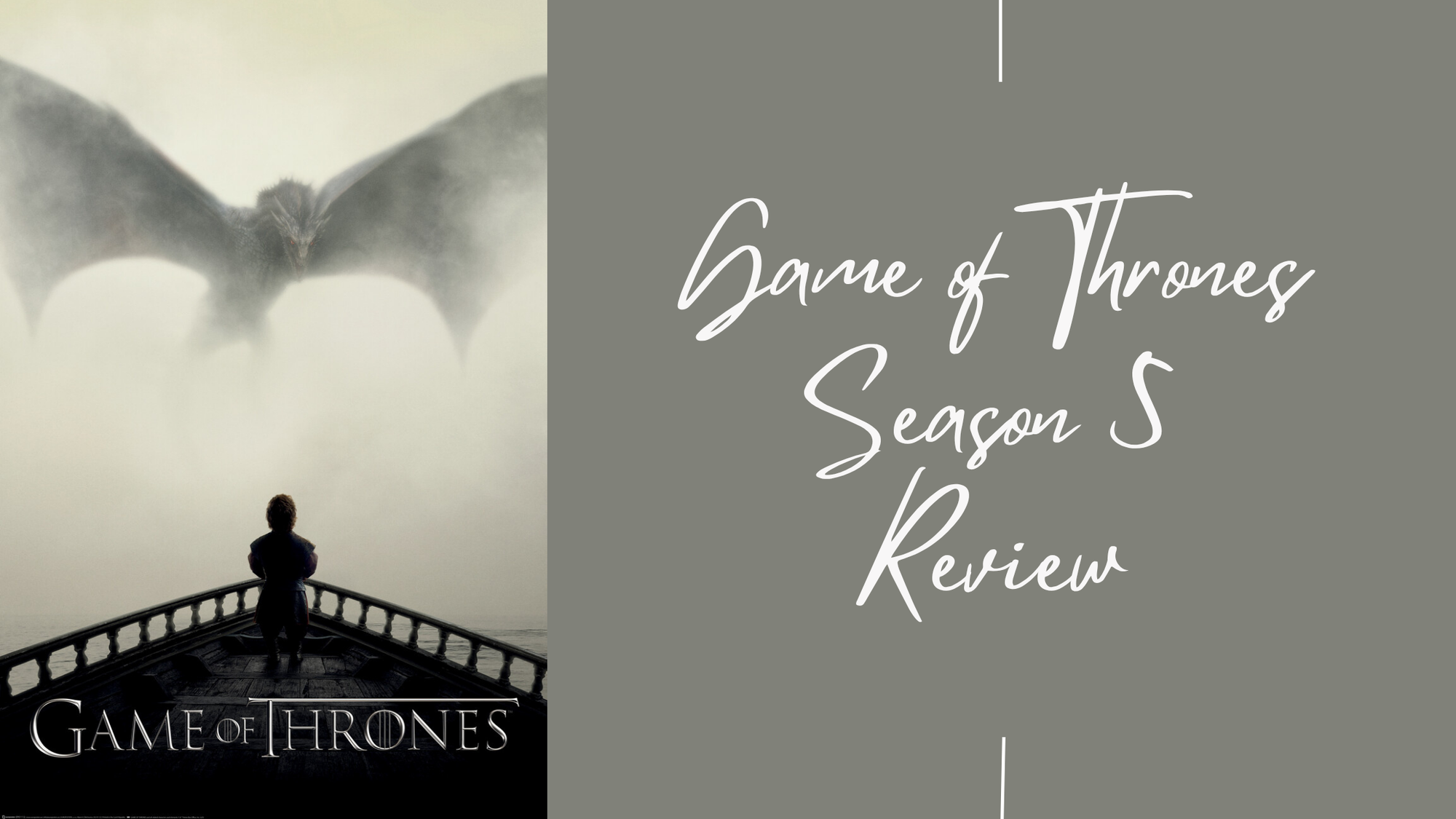
Hello everyone and welcome back to the blog! Today, I am back with the season 5 review of Game of Thrones. Honestly, I loved this season. I’ve read that this is the start of the downhill slope of the show, but in my opinion, I thought this season was great. Season 6 seems to be hit or miss with some people but generally well liked. It will be interesting to see how that compares. So, let’s get into it!
*Spoilers ahead.
I truly don’t even know where to start. There’s so much to unpack from this season like Sansa marrying Ramsey Bolton, Jon Snow becoming Lord Commander, the empowerment of The Faith and Cersei’s downfall, Stannis’ tragic downfall, Tyrion’s journey across the Narrow Sea, and THE ENDING.
Let’s start with Sansa and Ramsey Bolton. I knew better than to trust where Petyr Baelish was taking her. As soon as I had heard Lord Bolton wanted Ramsey to marry, I thought to myself “god him whoever his wife will be.” Little did I know it was Sansa Stark; my heart nearly stopped.
Ramsey is so terrible, and the actor is so good. Ramsey is like the Joffrey replacement but worse because he was a little more freedom to do what he wants. He really leans into his sadistic side with few that keep him in place. I mean we all saw what he did in seasons 3 and 4 to Theon.
But I like that his father challenges him. Especially with the added layer that Ramsey is a bastard no matter what his father says or does otherwise. Plus, there is the news of Roose having another son. A legitimate son. That adds pressure to Ramsey, and from what we’ve seen already he doesn’t like playing by the rules or being told what to do.
There was a lot more drama with bigger stakes in this season. Key players are finally making moves they’ve been planning for seasons. Characters are being challenged like never before. New alliances and relationships are forming.
Speaking of character arcs and one of the main points I want to bring up is how much I love Jon Snow’s character arc. With his new title of Lord Commander we can already see the ways in which he excels and differs from Ned Stark. Watching Snow deal with those that disagree with his orders was really interesting. He’s steadfast in his decisions, which I think is part of what makes him such a great leader.
He’s learning that leadership required compromise, he has to be flexible, traditions can be strayed away from – all of which Ned Stark wasn’t able to do. Jon is becoming the epitome of the version of “the Ned Stark who learned from his mistakes.” Which is crazy because in season three we all thought that Robb would be the one to set that example and succeed.
Even when he first started as Lord Commander Jon was willing to make decisions that Ned wasn’t willing to. Jon was willing to make unpopular decisions, ignore traditions if needed, and work with the enemy. That is why he’s been successful so far.
And yes, I know that he is killed at the end of the season, but we all know he isn’t dead. I can’t even imagine watching that in real time and not knowing the fate of Jon Snow. I would be so pissed.
Going off that though, if Jon is succeeding it makes me question why Robb didn’t. The first born Stark and heir is the one we all thought would succeed (rip Red Wedding episode). Comparing Robb to Jon, they have very distinct ways of leading.
Robb leads like a King; he leads like a Stark lord. Jon leads like he’s a problem-solver, reluctantly; he leads like he’s lived among outsiders. His experience at the wall gives him something Robb didn’t.
Robb was very charismatic, inspirational, and emotionally driven. He was the heroic young leader. He was good on the battlefield but not quite as good with the long-term political aspects of the game. He made decisions based off his emotions and personal honor – like marrying Talissa and disregarding his vow with Walder Frey.
Jon is steady, cautious, and analytical. He is the burdened leader forced to compromise. He is making decisions based on necessity, looking at the long term picture, and he’s willing to be disliked because of his decisions – like letting the Wildlings pass through their gate and onto their lands. He’s realizing that being right and being popular are two different things.
Another important point I want to touch on is back at King’s Landing, Cersei basically gives the Faith all this power and they take over the city. By the end, we know that Cersei atones for her sins and does the walk of shame. Finally, some karma.
Cersei trying to control an institution she has no control over is one of the major themes throughout the show. At the start of the season, she’s feeling politically cornered. She’s threatened by the Tyrells, her son, Tommen, is drifting away, and overall, she has declining control over King’s Landing and the crown.
This decision feels impulsive, emotionally driven, and lacking her usual tactical thinking. Which to me, is why this ultimately fails and she’s cornered herself even more.
Cersei assumes that the crown assumes all power and everyone else is beneath them. But the High Sparrow isn’t like most of the players we’ve seen. He doesn’t care about wealth, power, status, even noble blood. He’s resistant to intimidation. Cersei’s use to controlling people through fear, leverage, favors, etc. The Faith operates outside those incentives and that’s what makes the whole situation so dangerous.
Obviously, the irony is that Cersei creates this moral judgement system that eventually turns on her.
Which leads to her walk of shame, one of the most psychologically devastating moments in the series because it attacks the exact foundations of her identity. Her power comes from image, status, and fear. Her punishments strips all of that away…publicly. She’s forced to be vulnerable, to endure humiliation and exposure. She’s forced to appear powerless.
And why is this such a strong scene? It brings about complicated emotions for the viewers. Cersei is a complicated character and for the most part extremely disliked. She has caused such enormous suffering to others, she’s manipulated countless people, I mean, she wanted to kill her own brother. It was about time her character received due process. While Cersei has abused her power, it’s hard to watch public humiliation and mob cruelty.
Looking deeper at this whole storyline, we can gather that political power is fragile. Tywin Lannister appeared to have things holding on by a mere thread. With him gone, and Cersei and Jaime left, all they really have is their wealth to protect them. The Faith has social unity and morality which seem to have the upper hand.
This leads me to another crucial talking point – Stannis. Robb leads through emotion, Jon leads through compromise, Cersei leads through fear, but Stannis is a different type of leader from those we’ve seen so far.
Stannis is the leader that is trying to prove justice and birthright legitimacy. He’s not purely noble but he isn’t a monster like Joffrey. He shows entitlement; we’ve been shown that entitlement doesn’t mean anything, just look at the Lannisters from the last several seasons.
He takes responsibility, he understands the larger threats, and believes rulership is a burden rather than a pleasure. He doesn’t chase glory or popularity. He’s also steadfast in his decisions. He relies on the gods and believes in prophecy – that the ends justify a means.
By the end of season five, we see an obsession take hold of Stannis – at least a stronger hold than before. There are many obstacles put in his way once he leaves Castle Black. His army is not prepared for the winter, they’re running out of food, and half the men leave in the middle of the night. He’s holding on by a thread by the time he marches on Winterfell.
Honestly, his characters arc feels very Shakespearean; it’s very tragic. The sacrifice of his daughter, the loss of his wife, the abandonment by his army and Melisandre. One thing after another, and yet he continues his march forward.
It’s also interesting when you look at the sacrifices he’s made. He thinks each is making him stronger, but in reality, they are making him weaker. His daughter was the straw that broke the camel’s back. By the end, he barely has any humanity. His characters makes the viewers question, do good intentions justify terrible actions and is rightful authority enough?
Moving on, I want to touch on the overlap of Tyrion and Dany. I feel like having Tyrion be one of the first characters he meets and forms a relationship with makes the most sense. Dany has enormous power but lacks an understanding of the Westeros political system, and there is no one that understands the political system better than Tyrion.
Tyrion makes his way across the Narrow Sea and ends up kidnapped by Jorah. Those two end up having their own little adventure for a bit. Only to end up exactly where they wanted – with Daenerys. Tyrion’s belief in Westeros and his family have crumbled. He’s lost faith in society, but he sees Dany as someone who could fix the broken political system. Two sides of the same coin.
Furthermore, Dany doesn’t just want to rule; she wants to morally shape the world. She conquers and liberates and is a symbol of Hope. Throughout season five, we see her character challenged while in Meereen. She’s learning that just conquering and abolishing a system doesn’t mean the system dies. Is she as good at ruling as she is at freeing people? This season was the real test.
In Meereen, Dany is faced with economics, social groups, compromise, etc. We see her dealing with backlash, dissatisfaction, and violence. She cannot solve her problems how she normally does.
At the height of all this unrest, Dany seems lonelier than ever. She seems disconnected from her core group, from her advisors. Almost like she’s having an identity crisis. We know she’s been unwilling to compromise, but she did open the fighting gates. We get the sense that she doesn’t like compromise because it makes her appear weak. She’s liberated these people and does not want the same social structure, the same traditions to fall back into place.
Through some research it seems that this season was an important turning point for her character. The show no longer treats her as some inspirational leader but instead it starts to show the burden of power and the difficulty of ruling morally. Which we’ve seen many others come to terms with.
The last thing we have to talk about is the ending. The cliffhanger of an ending. Thank god, I’m watching this years later and don’t have to wait for season 6. That would’ve been so killer.
Jon’s position is unique because he’s seen firsthand the true threat beyond the wall, and he’s seen the humanity of the Wildlings. He knows their alliance is needed even if it’s never been done before. He’s focusing on not just their survival but everyone else’s. But we know that many members of the Night’s Watch do not view it that way. To them the Wildlings are lifelong enemies, brothers have died fighting them, they’ve raped and pillaged villages, and view Jon as a traitor for thinking of them as anything else.
The men that stab Jon do not view themselves as villains. They think they are protecting the Night’s Watch, protecting its purpose, and stopping a dangerous leader. They are determined to stick to their traditions.
In season five, we repeatedly see Jon making decisions based on the bigger picture, but he fails to understand the emotional and political fallout of his own men. He assumes his people will eventually understand necessity but fear often beats reason in Westeros.
Jon is trying to change the Watch as the world around them is changing, but most brothers are too rooted in their traditions to see the change as anything other than traitorous.
The ending scene hits so hard because Jon has increasingly become one of the show’s clearest moral centers, a genuinely selfless leader, and someone who is just trying to do the right thing. So again, the ending reinforces that idea that good intentions do not protect you from consequences. It also mirrors the earlier Stark tragedies – leaders who act honorably often fail to appreciate how dangerous fear and resentment can become.
Alright folks, that’s enough ranting from me for one blog post. Season five is one of my favorites so far, I truly loved all the character development that was shown. The stakes were high, and I can only see them getting higher. Ready for season 6!
Alright folks, that is all I have for this week! Come back next week for another blog post. As always, thank you for reading :)